Rote Flora und Schulterblatt Lively district

  • lee_maas_timo_sommer_schanze_karoviertel_rote_flora_3000px_argb_565
    © lee_maas_timo_sommer
  • lee_maas_timo_sommer_schanze_karoviertel_rote_flora_3000px_argb_597
    © lee_maas_timo_sommer

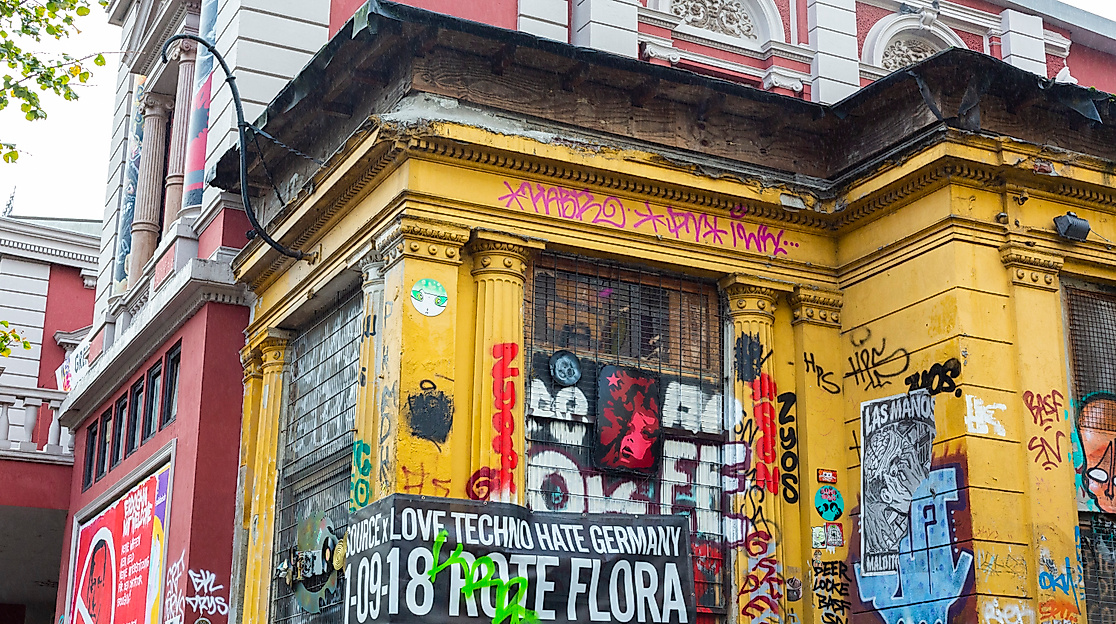
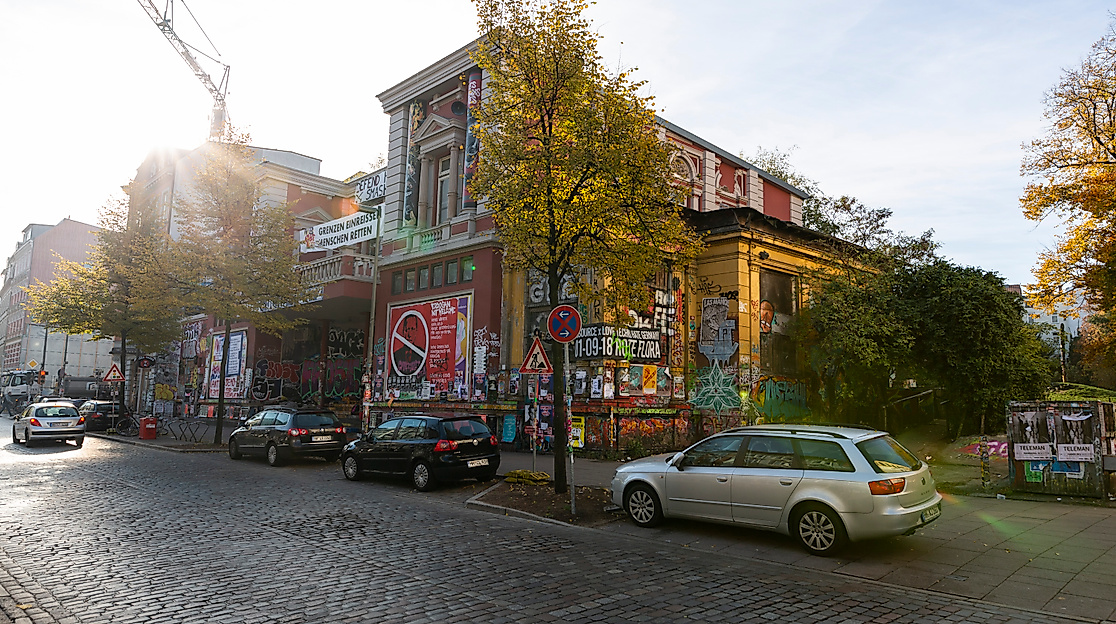
Schulterblatt is the hot spot of Schanze with many restaurants and bars. As a self-proclaimed autonomous cultural center, the Rote Flora is a building with a special history.

The redoubt was not far from St. Pauli and in its original purpose once a part of the fortifications of Hamburg (Sternschanze), has after the French occupation time its own small amusement district pronounced and the Schulterblatt was - as one would say today - the hot spot. As it still is today.
Schulterblatt is one of the many streets in Hamburg where the name tells its story. Now there was no surgical clinic here, however, but a proper sailor's pub that had the shoulder blade of a whale as its store sign.
Today there is a wide range of pubs, bars and restaurants on the Schulterblatt that it can be very difficult to make a decision.

In its center is the "Rote Flora". Today a self-proclaimed autonomous cultural center and still a hub of political action, the Flora or rather the Flora Concerthaus with all its predecessors was a place of vaudeville, dance and general amusement until World War 2. After the war, the building was used for a wide variety of purposes. These included a cinema, a warehouse, alternative locations for other cultural institutions and much more. When plans to turn the Flora into a musical theater (Phantom of the Opera) became known at the end of the 1980s, resistance in the neighborhood grew stronger and stronger. In the summer of 1989, the city offered the defiant initiatives the building temporarily for rent in order to present the proposed use as a district cultural center.
As a result, the Flora was occupied in November 1989, given its purpose as the Red Flora under self-administration, and the "New Flora" was unceremoniously built on Holstenstrasse for the Phantom of the Opera.
More on this subject

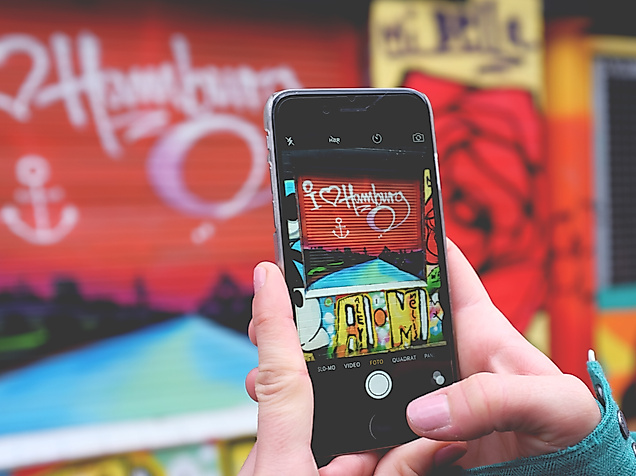
Smartphone fotografiert buntes Hamburg-Graffiti, Symbol für Social Media und Influencer-Kommunikation
© Hamburg Tourismus GmbH

CITY AREA PORTRAIT Sternschanze & Karoviertel

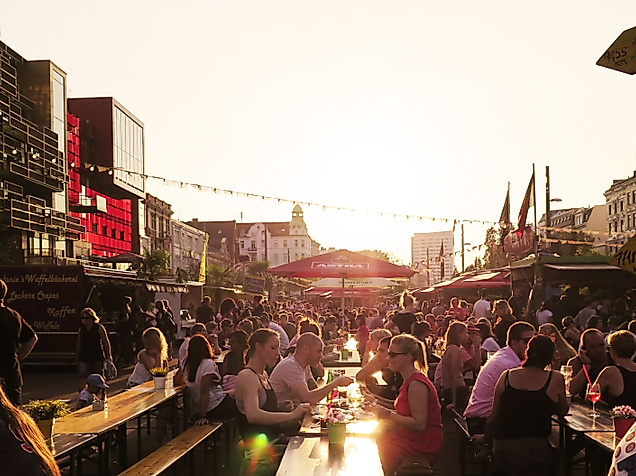
The two districts around Schanzenstraße and Schulterblatt are always in motion. Here, it is colourful and lively, and it has become much fancier in the last few years. Still, the district in the borough of Altona has preserved much of its rough, leftist-alternative nonconformism.

Sternschanze & Karoviertel

THIS MIGHT INTEREST YOU AS WELL Further recommendations

l-spielbudenplatz-auf-der-reeperbahn
© Marius Röer

930 metres of nightlife & entertainment Reeperbahn

Not even one kilometre in length, and yet rich in contrast: the Reeperbahn is bright and shrill, vibrant and down-to-earth – and so much more than just “the sinful mile”. A hotspot for live music and famous for its party atmosphere, the legendary entertainment district in the heart of St Pauli is always worth a visit, offering anything from glamorous shows to colourful musicals.

Reeperbahn
St. Michaelis Kirche
© ThisIsJulia Photography

Hamburg Michel St. Michaelis Kirche

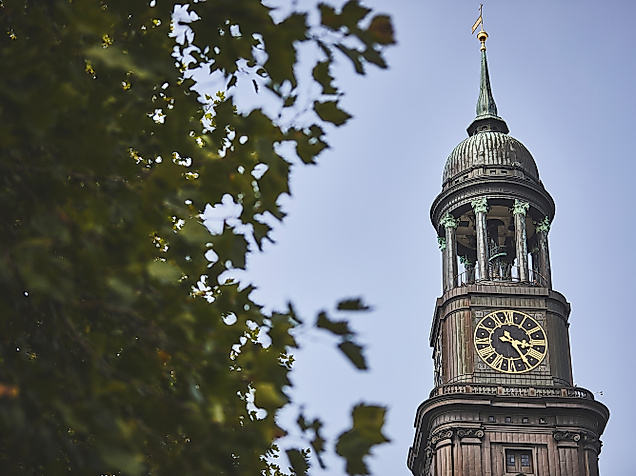
Hamburg has many large churches - but only one "Michel": On its platform 106 metres high, there is a fabulous (and breezy) view of Hamburg, the port and the surrounding countryside - one that should not be missed!

St. Michaelis Kirche
altonaer-balkon_c-vera-mueller_01
© Vera Müller

Unique park above the Elbe Altonaer Balkon

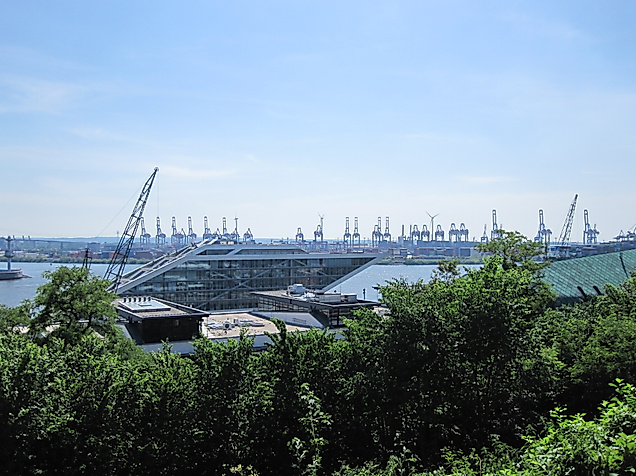
The Altona Balkon – “Altona Balcony” – is around 27 m higher than the Elbe and offers a fantastic view of the Hamburg harbour, the legendary fish market and all the colourful goings-on along the shore.

Altonaer Balkon

Languages

Google translator for other languages

Please note that this is an automatic translation.
For better information, you can always switch to the German or English version