Haus der Patriotischen Gesellschaft

  • Haus-der-Patriotischen-Gesellschaft-Außen-c-Christian-Augustin-web-1-2500x1500
    © Christian Augustin
  • Haus-der-Patriotischen-Gesellschaft-Innen-c-BeMotion360-web-1-2500x1500
    © BeMotion360
  • Haus-der-Patriotischen-Gesellschaft-c-Christian-Augustin-web-2-2500x1500
    © Christian Augustin
  • Haus-der-Patriotischen-Gesellschaft-c-BeMotion360-web-4-2500x1500
    © BeMotion360
  • Haus-der-Patriotischen-Gesellschaft-c-BeMotion360-web-2-2500x1500
    © BeMotion360
  • Haus-der-Patriotischen-Gesellschaft-c-BeMotion360-web-5-2500x1500
    © BeMotion360
  • Haus-der-Patriotischen-Gesellschaft-c-BeMotion360-web-3-2500x1500
    © BeMotion360
  • Haus-der-Patriotischen-Gesellschaft-c-BeMotion360-web-6-2500x1500
    © BeMotion360

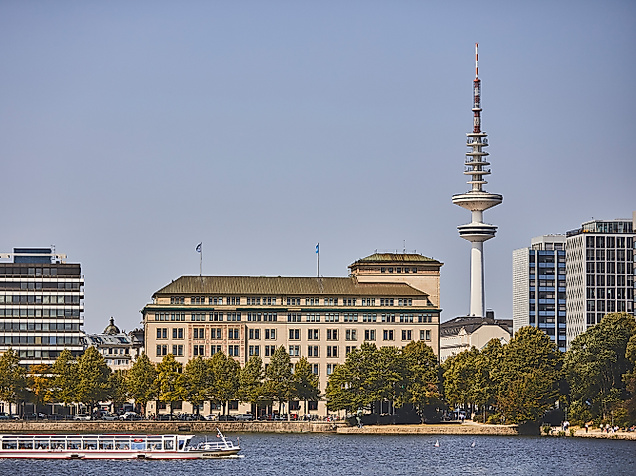
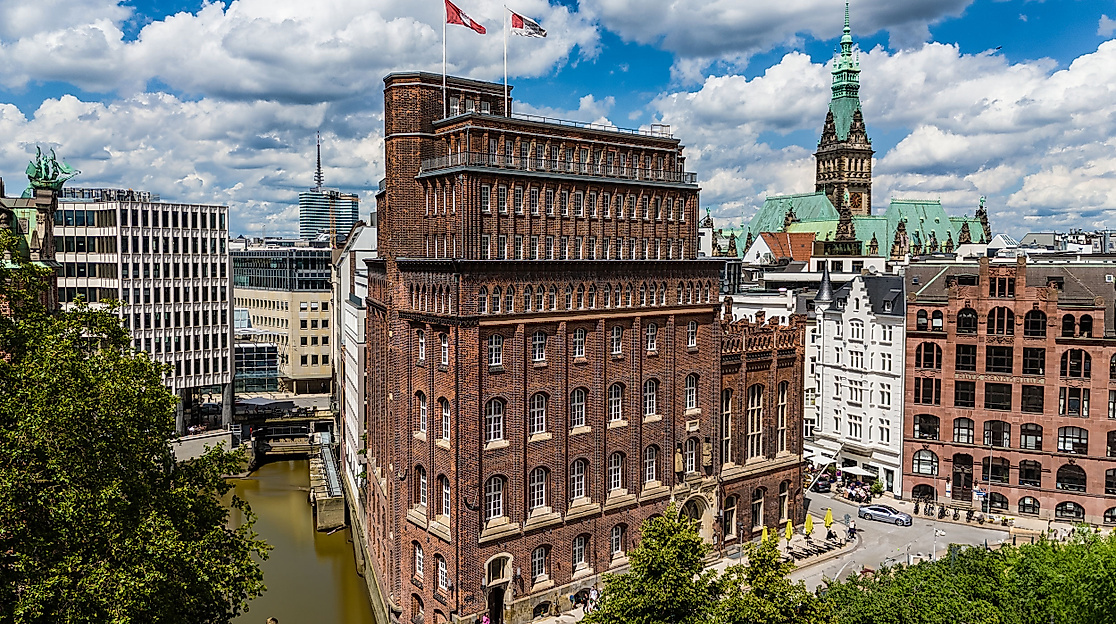
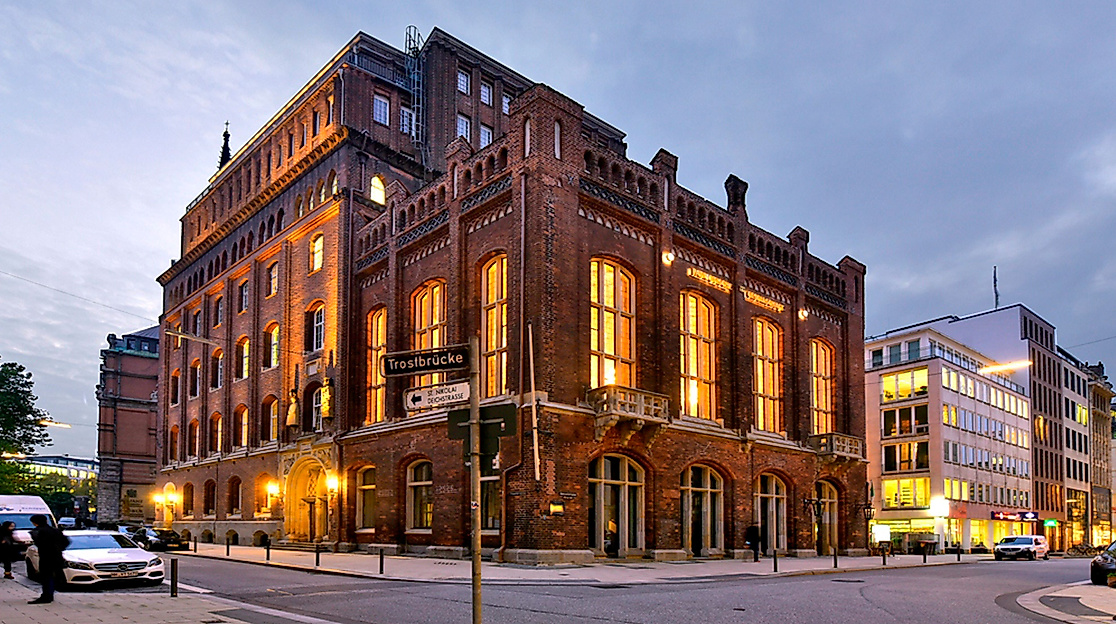
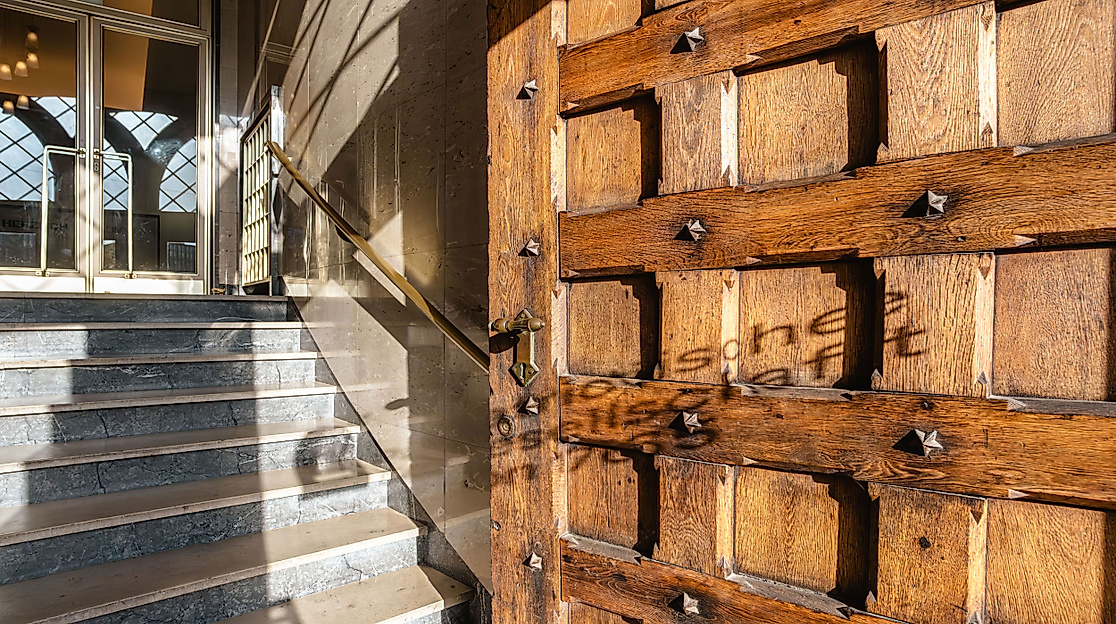
The listed building of the Patriotic Society on Trostbrücke stands on the site where Hamburg's old town hall was located from the 13th century until it was blown up in the Great Fire of 1842.

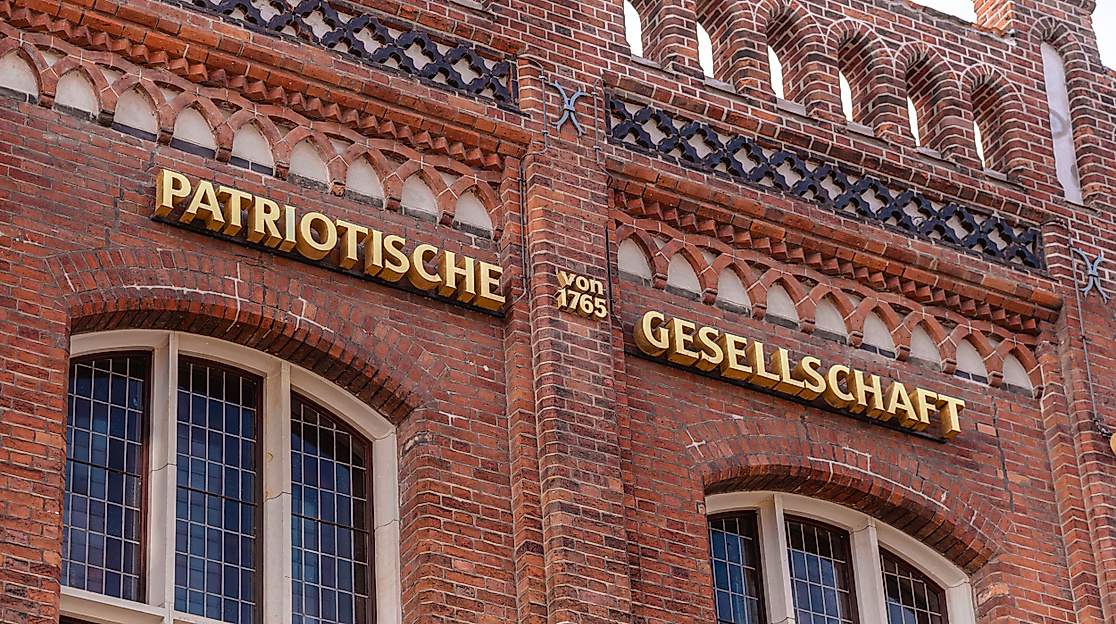
The Haus der Patriotischen Gesellschaft is one of Hamburg's most important architectural monuments. It is located in the city centre on the site where Hamburg's old town hall stood for almost 600 years until it was blown up in the Great Fire of 1842. A year and a half later, the council decided to give the Patriotic Society of 1765, whose own building in Große Johannisstraße had also fallen victim to the fire, the land on Nikolaifleet for a new building.

Following a competition in 1844, the building was constructed from 1845 to 1847 according to plans by architect Theodor Bülau and was the site of political decisions for almost half a century: From 1848 to 1850 it was the meeting place of the Hamburg Constituent Assembly and from 1859 to 1897 of the Hamburg Parliament.

After the establishment of a restaurant on the ground floor of the hall building in 1912, economic difficulties began, and so in 1923 the Überseeclub took over the building in usufruct with the right to carry out alterations and extensions. In June 1923, the building is listed as a historical monument. In September 1943, the building was largely destroyed in a bombing raid. Reconstruction from 1945 onwards aims to achieve a ‘simple and functional design’.

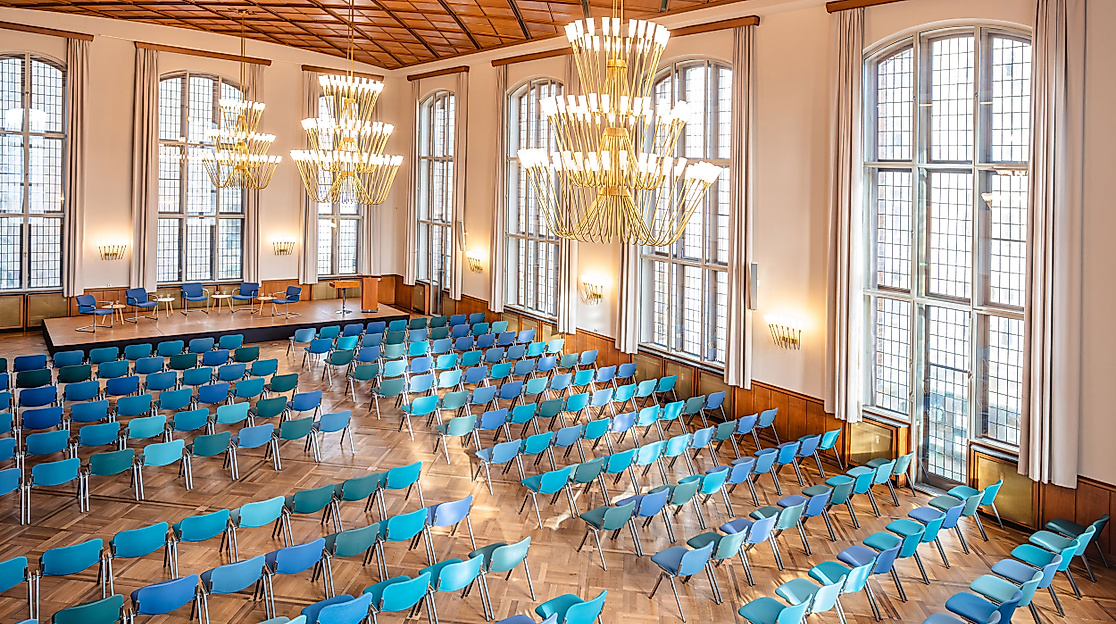
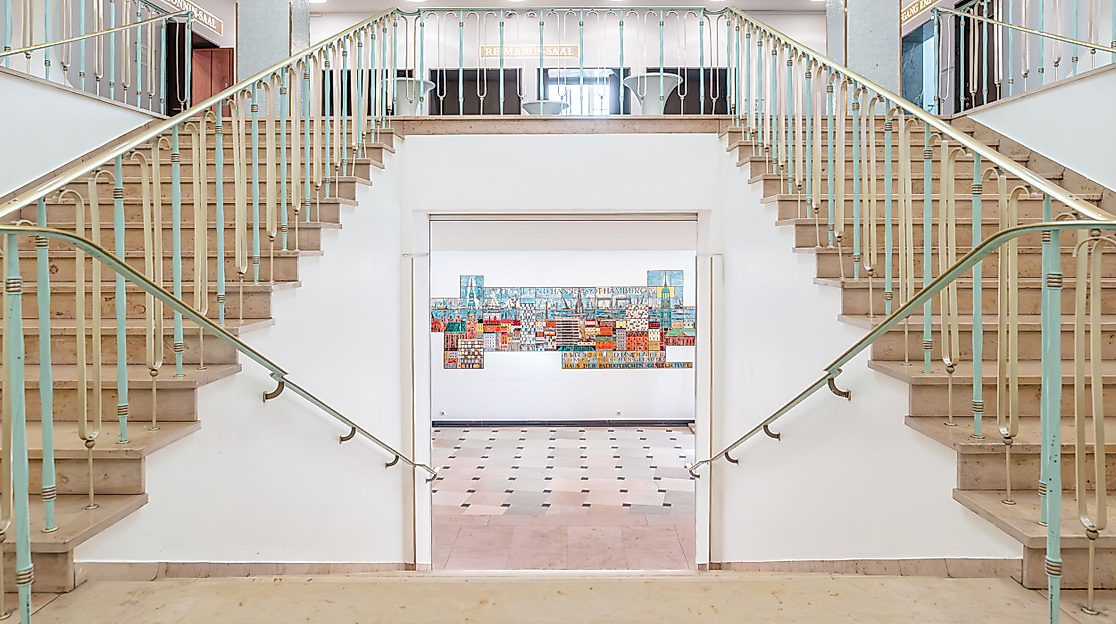
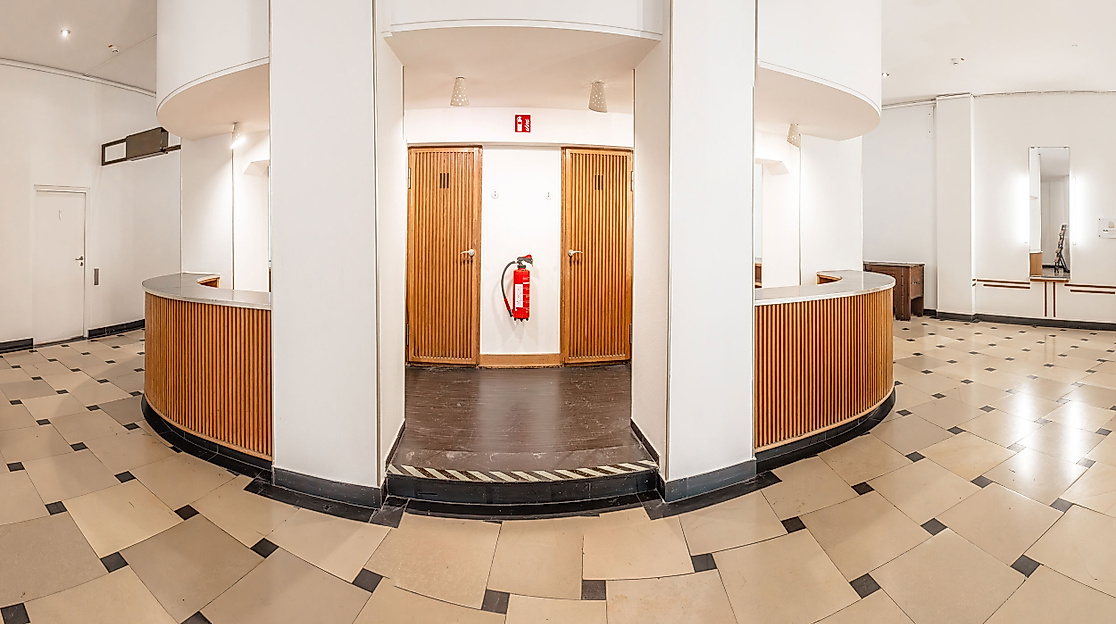
The rooms of the Saalbau are named after the founding fathers of the Patriotic Society, Reimarus, Kirchhof, Sonnin and Tonnies, as well as the architect of the house, Bülau.

SAALHAUS GmbH, a subsidiary of the Patriotische Gesellschaft, rents out these halls for events and thus generates funds for the charitable work of the parent organisation.
DISCOVER NOW Events at this location

  • 250603_gfhsc_pht_104-2
    © Hamburg Sustainability Week

    Hamburg Sustainability Week (over 150 events throughout Hamburg) Social encounters

    • 29.06.2026
    • 08:00
    • Rathausmarkt Hamburg
    To event
  • 18_Hamburg_S_Taskoeprue_4163_1_300dpi
    © Regina Schmeken

    Blutiger Boden. Die Tatorte des NSU Exhibition

    • 29.06.2026
    • 10:00
    • Altonaer Museum
    To event
  • SKULPTURAL
    © Griechische, weiße Gipsstatue eines Diskuswerfers in klassischer Wurfhaltung auf Sockel

    SKULPTURAL Exhibitions

    • 30.06.2026
    • 10:00
    • Hamburger Kunsthalle
    To event
  • IMG_9992-1
    © Hamburger Kunsthalle, Foto: Jann Wilken

    Acht Jahrhunderte Kunst Permanent Exhibition

    • 30.06.2026
    • 10:00
    • Hamburger Kunsthalle
    To event
  • 251105_TPH_Keyvisual_3x2-2
    © Triennale der Photographie Hamburg

    Triennale der Photographie 2026 Festivals

    • 29.06.2026
    • 10:00
    • verschiedene Spielstätten in Hamburg
    To event
  • mkg_fotohanshansen_ot_kameraobjektiv_1985_hanshansen
    © Hans Hansen, Detail aus o. T. (Objektiv), für Nikon, 1985, Hans Hansen

    Photo: Hans Hansen Exhibitions

    • 30.06.2026
    • 10:00
    • Museum für Kunst und Gewerbe Hamburg (MK&G)
    To event
  • Fassade P  2 2007_3x2
    © Panoptikum

    Panoptikum - Wax Museum

    • 29.06.2026
    • 10:00
    • Panoptikum
    To event
  • MK&G_XULY.Bët_HerbstWinter24_25_Foto_Marc_Baptiste_3_klein
    © XULY.Bët, Kollektion Herbst/Winter 2024/25, Foto: Marc Baptiste

    XULY.Bët. Funkin’ Fashion Factory 100% Recycled Exhibition

    • 30.06.2026
    • 10:00
    • Museum für Kunst und Gewerbe Hamburg (MK&G)
    To event
  • MK&G_InspirationJapan_SlgWalterGebhard_SuzukiKiitsu_Tänzerinnen_Detail_FotoTobiasEckmann
    © Suzuki Kiitsu, Tänzerinnen (Detail), Japan, 1. H. 19. Jh., Hängerolle, MK&G, Erworben mit Mitteln der Campe’schen Historischen Kunststiftung aus der Sammlung Walter Gebhard, Foto: MK&G/Tobias Eckmann

    Inspiring Japan Permanent Exhibition

    • 30.06.2026
    • 10:00
    • Museum für Kunst und Gewerbe Hamburg (MK&G)
    To event

More on this subject

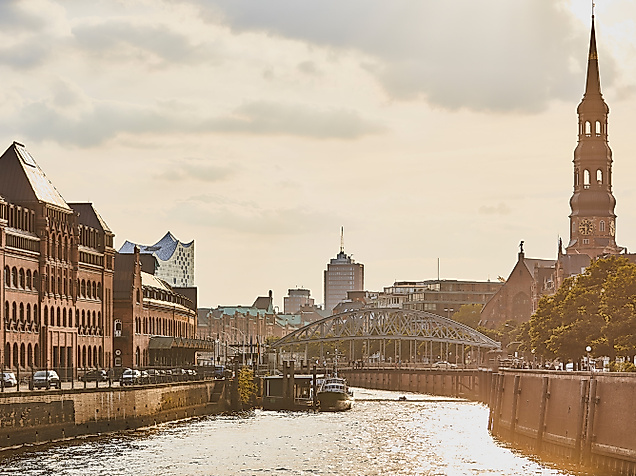
Abendstimmung in der Hamburger Speicherstadt mit Blick auf Kanal, historische Gebäude und Kirchturm
© ThisIsJulia Photography

CITY AREA PORTRAIT HafenCity & Speicherstadt

The world’s largest warehouse complex and UNSESCO World Heritage. On the other side, towards the banks of the Elbe, the modern, ever-growing architecture of the new harbour district HafenCity. Also, you can enjoy the view of the harbour from nearly everywhere.

HafenCity & Speicherstadt

THIS MIGHT INTEREST YOU AS WELL Further recommendations

jubilaeum-hamburg-dungeon-c-hamburg-dungeon-nick-mailer-web-2-2500x1500
© Hamburg Dungeon / Nick Mailer

Gain an insight into the dark side of Hamburg's city history Hamburg Dungeon

Experience history in a different way: In the catacombs of Hamburg's UNESCO World Heritage Speicherstadt, professional actors bring the city's darkest events back to life. In front of gruesome backdrops and with the help of cinematic effects, visitors experience the historical events of Hamburg's history for 90 minutes in thirteen different show areas.

Hamburg Dungeon
deutsches-zollmuseum_c-2018-thisisjulia-photography-1
© ThisIsJulia Photgraphy

German Customs Museum

Located in the historic Speicherstadt warehouse district, the German Customs Museum invites its guests a vivid and lively insight into the world of those who have been collecting and the German Customs Museum invites visitors to learn about the world of those who collect customs duties from ancient times to the present day and those who prefer to smuggle.

German Customs Museum
© ThisIsJulia Photography

Outstanding German civil engineering Alter Elbtunnel

When the old Elbe Tunnel, also called St. Pauli Elbe Tunnel, opened in 1911, it was a technical sensation. Today, it is a nostalgic and lovingly tended piece of Hamburg history – and has already celebrated its 100th anniversary.

Alter Elbtunnel

Top customer reviews

No reviews available.

Write new rating

This is your text

Your rating *

Languages

Google translator for other languages

Please note that this is an automatic translation.
For better information, you can always switch to the German or English version