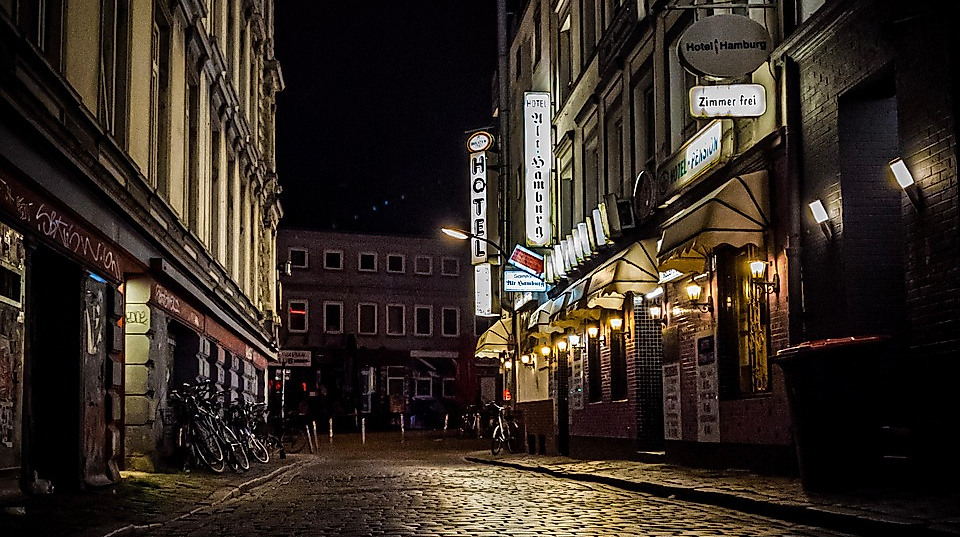
400 years of the Reeperbahn mean much more than just a kilometer of red-light district. They mark the historical existence of Hamburg's famous thoroughfare. Over the centuries, it has changed and reinvented itself time and again. On the many walking tours, visitors learn about its history and stories of good times and bad. Moments of euphoria, hope, and despair at the outbreak of World War II. A war made possible only by its proximity to the port.
With the Nazi Party's rise to power in the 1930s, the political landscape changed dramatically. Germany was at war and began a massive rearmament program. Once again, the Port of Hamburg became a focal point. As the most important armaments production center, the region became a prime target. Shelters were needed to protect the war-essential workers. Without their labor, the war would have been lost quickly. Bunkers were required and constructed as rapidly as possible. Due to the geological conditions, the construction of these massive structures was only possible on the St. Pauli side of the Elbe River. Space was to be created near the Elbe for 40,000 dockworkers and their families. In just a few years, a variety of shelter types were built.
Join me as we journey into the past and together we'll decide what makes the most sense for its future use!


