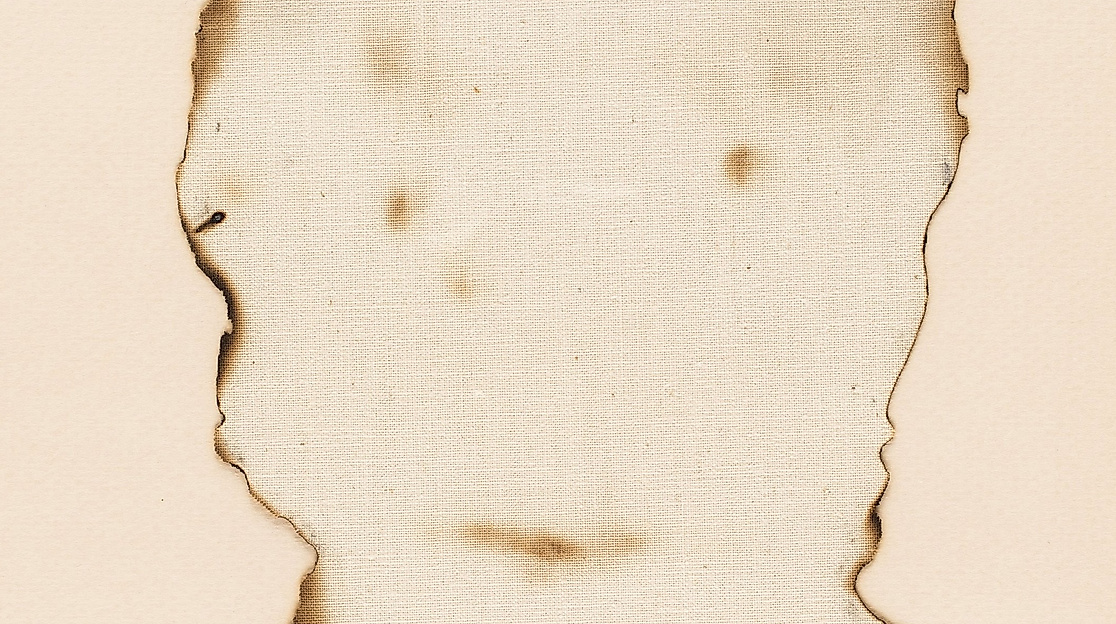
From the 1950s until her death in 2008, Rothman developed a unique feminist œuvre, where aspects of the everyday are set against a biographical and historic backdrop. Characterised by the radical processing of a lived present after the Shoah, Rothman’s practice negotiates lines of temporality and transience through, amongst other things, the preservation ephemeral and forgotten materials in a body of work that moves from abstract painting in the 1950s into the vocabulary of post-conceptual feminist sculpture in the 1960s and 70s. By recurring gestures – sewing, mending and enveloping, carving texts into fabric or paper, and holding together torn or decaying fragments – Rothman gives form to impermanence and memory alike, emphasising clothing as a membrane between fragile bodies and the world that surrounds them. Here, Rothman’s gestural poetics understand repair as the materialisation of the perpetual guided by the question: ‘How can life be saved and preserved despite constant destruction?’
Lenke Rothman: Quality of Life Exhibition
-
© Helene Toresdotter/Malmö Konsthall
No liability is assumed for the correctness of the data.


Search
Languages
Google translator for other languages
Please note that this is an automatic translation.
For better information, you can always switch to the German or English version